
Master the Hip Hinge: The Pattern Behind Deadlifts, Swings, and More
The hip hinge is a movement that targets your posterior chain muscles, such as your glutes, hamstrings, and back extensors. During this movement, all the motion happens at the hips while your spine stays neutral.
Learning how to hinge correctly is crucial for maintaining back health. It allows you to bend, lift, and pick things up without rounding your spine and placing unnecessary stress on your back.
Although it is a very important movement, the hip hinge is often overlooked. Due to modern lifestyles and poor posture, many people lose this movement pattern and need to relearn how to hinge properly.
These exercises are a good starting point and can be used as part of your warm up routine. The idea is to repeat them until the movement feels more natural.
1. Kneeling 3-point touch hip hinge
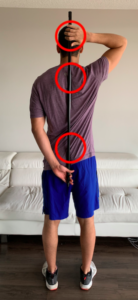
Starting on your knees (use a foam pad or towel if necessary), place a dowel behind your back, making sure it is in contact with these three points:
-
-
-
-
-
-
-
-
- The back of your head
- Your upper back
- Your sacrum (right above your glutes)
-
-
-
-
-
-
-
From here, push your hips back towards your heels or wall behind you while maintaining the 3 points of contact throughout the whole movement. Then return to an upright position.
If there is any bending at the spine, the dowel will come off one of those contact points. We want to avoid that! If this happens, that’s your cue to reset and try again.
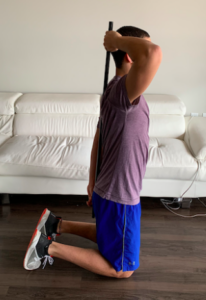
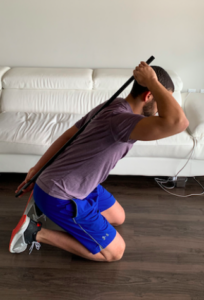
2. Kneeling kettlebell/dumbbell behind the back hip hinge
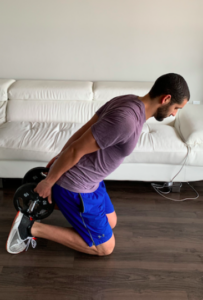
For this exercise, you also want to be on your knees. This eliminates the lower portion of your legs (from knee down), allowing you to focus only on the hips.
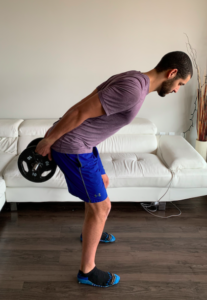
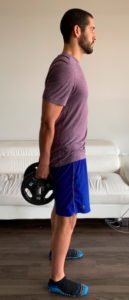
Hold a kettlebell or dumbbell behind your back. Keep your shoulders back (squeeze your shoulder blades together lightly). From here, you want to use your glutes to push the weight back towards your heels (essentially pushing your hips back).
Once you feel comfortable, you can stand up and repeat both exercises on your feet. Adding the lower portion of your legs creates both muscular and neurological adaptations, helping the movement transfer to exercises like deadlifts and other hip dominant lifts.

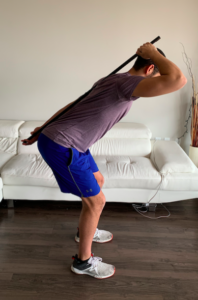
3. Standing 3-point touch hip hinge
For this exercise, focus on the same principles as the kneeling 3-point touch hinge and follow the same instructions. Keeping the 3 points of contact (back of the head, upper back and sacrum) as you push your butt back and hinge at the hip.
Pay attention to your lower legs. From the knee down, they should stay mostly vertical as you hinge. This is a good indicator that the movement is coming from the hips, not the knees or lower back.

4. Standing kettlebell behind the back hip hinge
As with the kneeling version, you are going to focus on pushing the weight back using your hips. Keep your spine neutral and shoulders set. Again, notice how the lower part of your leg stays mostly vertical.
In both standing versions of these exercises, you are going to feel more of a stretch on your hamstrings; this is a good sign you are doing it right!
How to Use These Exercises
You can do 2 sets of 10 reps of each exercise as part of your warm up, especially on days when you are working your lower body. Work through these exercises until the movement feels comfortable and consistent.
Once the pattern feels natural, you can focus on the standing versions of both.
Mastering the hip hinge is one of the best ways to build a safe, strong foundation for exercises like the deadlift and any movement that requires you to bend at the hips.
– Hugo Salazar (Personal Trainer)